


We can't find the internet
Attempting to reconnect
Something went wrong!
Hang in there while we get back on track
EXHIBITION
Elisabeth von Samsonow
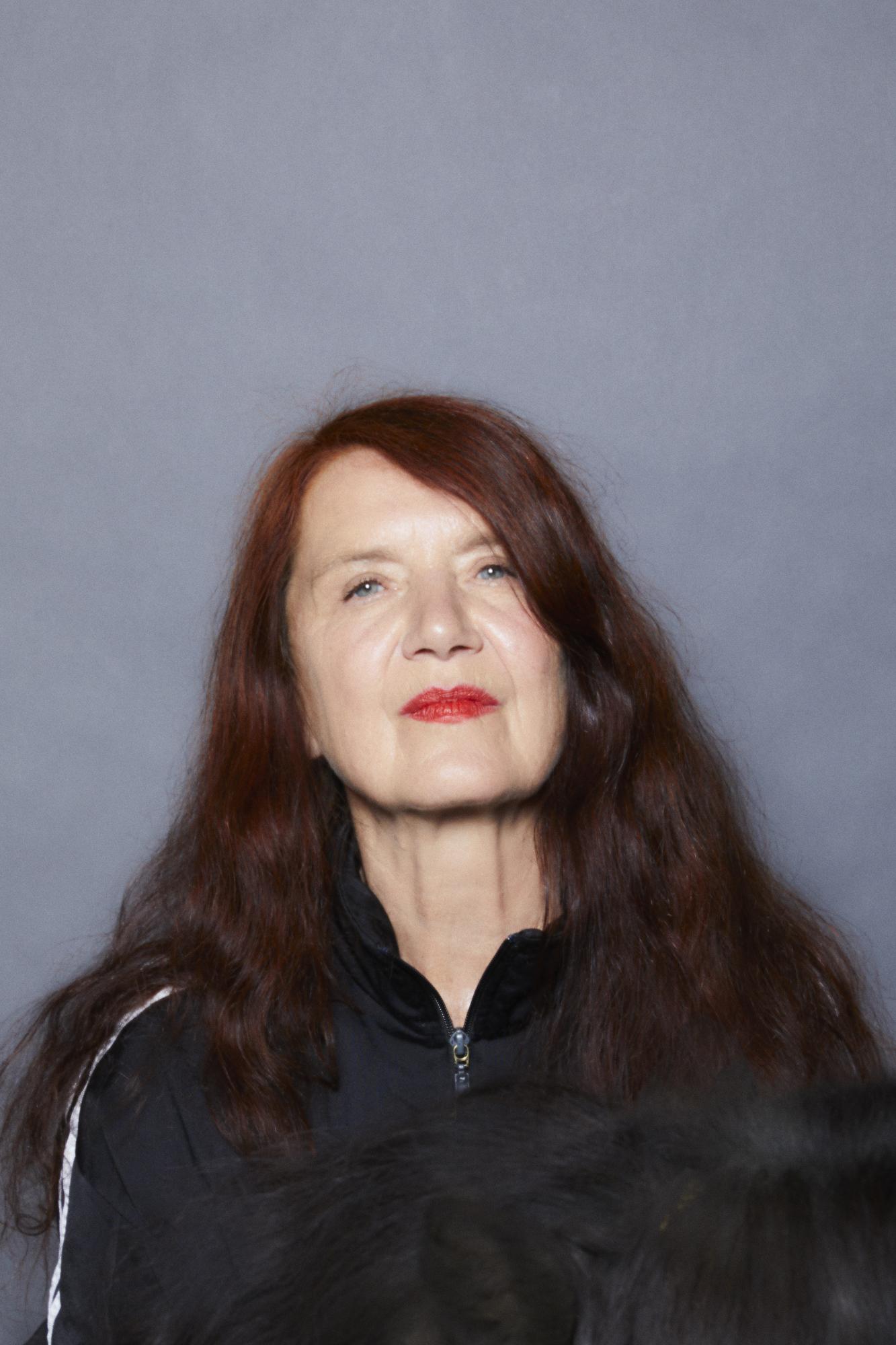
Elisabeth von Samsonow, Foto: Rafaela Pröll
As the first major exhibition under the new director, Verena Kaspar-Eisert, the Heidi Horten Collection is dedicating (*1956), presenting for the first time the full breadth and depth of her interdisciplinary body of work. Painting, sculpture, performance, photography, and drawing enter into a dialogue with her philosophical thought as well as her social and ecological commitment, offering the most comprehensive insight to date into Samsonow’s work.
At the heart of her artistic practice lies an exploration of the Earth as a living entity—as the bearer of history, energy, and collective memory. Drawing on ecofeminist thought, Samsonow develops alternative visions of coexistence and interconnectedness among humans, animals, plants, and the Earth.

19. September 2026 bis 28. Februar 2027
A central point of reference is the “Land of the Goddesses” in the Pulkautal valley in Lower Austria, where Samsonow combines artistic practice, ecological engagement, and community action. Ten works from the Heidi Horten Collection also enter into a deliberate dialogue with Samsonow’s works.
The exhibition is the first major retrospective in Director Verena Kaspar-Eisert’s program and is curated by Hana O. O. Haas and Rolf H. Johannsen. To mark the exhibition, the first comprehensive monograph on Elisabeth von Samsonow’s artistic oeuvre will be published.
An open studio underscores the exhibition’s participatory and dialogic nature, as well as the concept of an expanded artistic practice that is characteristic of Samsonow’s work. Visitors are invited to actively explore his interdisciplinary universe and reflect on an understanding of the world based on interdependence, connectedness, and responsibility.
Exhibition design: tne nextENTERprise architects

Download Presstext
Download Catalogue
Press images
Click on the images to download the respective image in 300 DPI.

Elisabeth von Samsonow
Photo: © Rafaela Pröll

Elisabeth von Samsonow
Photo: © Sophie THun

Elisabeth von Samsonow, Mirror Horses 1 and 2, 2023, Photo © Max Brucker
Elisabeth von Samsonow, Spiegelpferde 1 und 2, 2023 / Foto © Max Brucker

Elisabeth von Samsonow
Löss Untermarkersdorf, 2021, Photo: Maresa Jung

Elisabeth von Samsonow, Feathercoat, 1987, Photo Walter Bayer
Courtesy the artist
Elisabeth von Samsonow, Federmantel, 1987 / Foto © Walter Bayer

Elisabeth von Samsonow, Why Woman must Own the Territory 7/12, 2025

Elisabeth von Samsonow, When Disaster Strikes, the Centaurs Must Come to the Rescue, 2024, Egg tempera on jute, 200 × 150 cm, Courtesy the artist

Elisabeth von Samsonow, Geopsyche: Better Energy or the Return of the Swallows, 2022, Photo: Maresa Jung
Elisabeth von Samsonow, Geopsyche: Better Energy or the Return of the Swallows, 2022 / Foto © Maresa Jung

Elisabeth von Samsonow, from the series: Maps Land of the Goddesses, 2021, Photo © Maximilian Brucker
Elisabeth von Samsonow, from the series: Maps Land of the Goddesses, 2021 / Foto © Max Brucker

Elisabeth von Samsonow, Transplant B blau, 2014, Photo © Christoph Fuchs

Elisabeth von Samsonow, Ektoplasma - Yeah, 2012, Photo © Maximilian Brucker

Exhibition View Elisabeth von Samsonow, Heidi Horten Collection, Vienna, 2026, Photo © Simon Veres

Exhibition View Elisabeth von Samsonow, Heidi Horten Collection, Vienna, 2026, Photo © Simon Veres

Exhibition View Elisabeth von Samsonow, Heidi Horten Collection, Vienna, 2026, Photo © Simon Veres
CABINET EXHIBITION
To Shoe or Not to Shoe. Warhol and Others
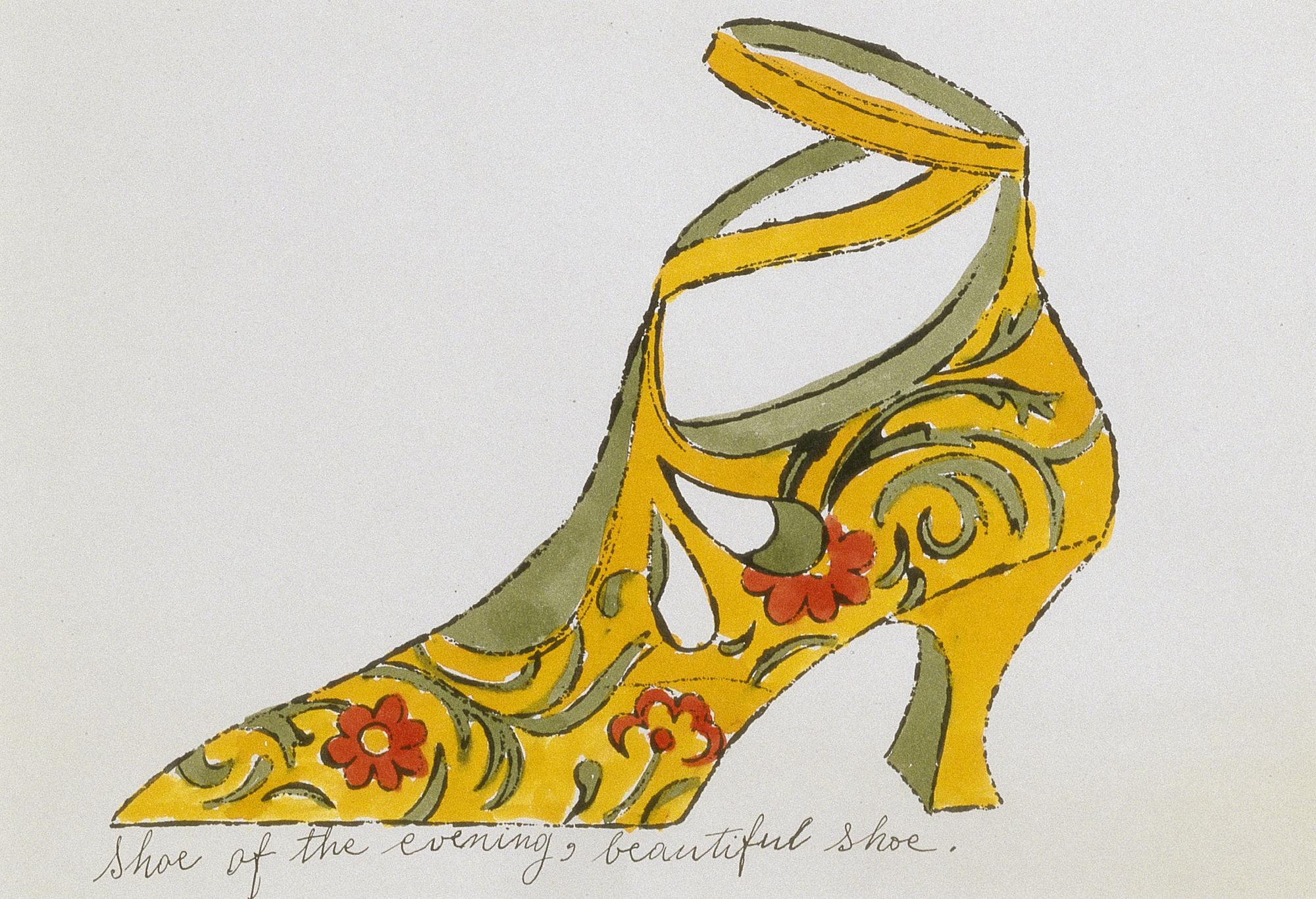
Andy Warhol, Á La Recherche du Shoe Perdu by Andy Warhol. Shoe Poems by Rolph Pomeray (Umschlagblatt) ca. 1955, Heidi Horten Collection © The Andy Warhol Foundation for Visual Arts/Bildrecht, Wien, 2026
Andy Warhol, Á La Recherche du Shoe Perdu by Andy Warhol. Shoe Poems by Rolph Pomeray (Umschlagblatt) ca. 1955 / Heidi Horten Collection © The Andy Warhol Foundation for Visual Arts/Bildrecht, Wien, 2026
Andy Warhol’s graphic series *Á La Recherche du Shoe Perdu* was created in 1955 as part of his commission to design weekly shoe advertisements for the *New York Times*. More than a dozen drawings were produced, which the poet Ralph Pomeroy annotated with ironic literary allusions and which Warhol compiled into a portfolio. Building on this series, this cabinet exhibition explores the women’s shoe as a fetish object, a canvas for projection, and a subject of feminist critique. In addition to Andy Warhol, other female artists such as Birgit Jürgenssen, Gudrun Kampl, and Lena Henke are represented with their interpretations of the shoe. They also examine the object as a symbol of desire, discipline, and gender roles.
Curated by Rolf H. Johannsen
Gudrun Kampl, Vorwärtsschnitt, 2021 Courtesy Heidi Horten Collection © Die Künstlerin
Press images
Click on the images to download the respective image in 300 DPI.

Andy Warhol, Á La Recherche du Shoe Perdu by Andy Warhol. Shoe Poems by Rolph Pomeray (Umschlagblatt) ca. 1955, Heidi Horten Collection © The Andy Warhol Foundation for Visual Arts/Bildrecht, Wien, 2026
Andy Warhol, Á La Recherche du Shoe Perdu by Andy Warhol. Shoe Poems by Rolph Pomeray (Umschlagblatt) ca. 1955 / Heidi Horten Collection © The Andy Warhol Foundation for Visual Arts/Bildrecht, Wien, 2026

Birgit Jürgenssen, Aschenbrödel, 1976, Heidi Horten Collection © Estate of Birgit Jürgenssen/Bildrecht, Wien, 2026
Birgit Jürgenssen, Aschenbrödel, 1976, Heidi Horten Collection / © Estate of Birgit Jürgenssen/Bildrecht, Wien, 2026

Gudrun Kampl, Vorwärtsschnitt, 2021 Courtesy Heidi Horten Collection © Die Künstlerin
Gudrun Kampl, Vorwärtsschnitt, 2021 / Courtesy Heidi Horten Collection © Die Künstlerin
Verena Kaspar-Eisert's Inaugural Program
With Verena Kaspar-Eisert taking the helm, the Heidi Horten Collection is positioning itself as an open space for thought and experience, where the collection, exhibition program, and art education interact on an equal footing. The existing collection will be consistently reinterpreted from a contemporary perspective, strategically expanded—particularly to include female and contemporary artists—and placed in dialogue with current social issues.
The 2026 program spans a thematic arc from the major spring exhibition *ANIMALIA: Of Animals and Humans* to exciting artistic interventions in public space such as *Gottfried Bechtold. Betonporsche to a comprehensive solo exhibition on Elisabeth von Samsonow, as well as collection presentations centered on Andy Warhol’s early work. The exhibition program is accompanied by a wide range of educational offerings with a strong focus on inclusion, children, and young people.
You can find all details regarding the program, collection, educational programs, and institutional mission in the press release download.
Download Presstext
Museum


Heidi Horten Collection, Photo: Ouriel Morgensztern


Heidi Horten Collection, KLIMT ⇄ WARHOL, Fotos: Ouriel Morgensztern
Director


Verena Kaspar-Eisert, Director, Photo: Klaus Pichler
CO2ntext
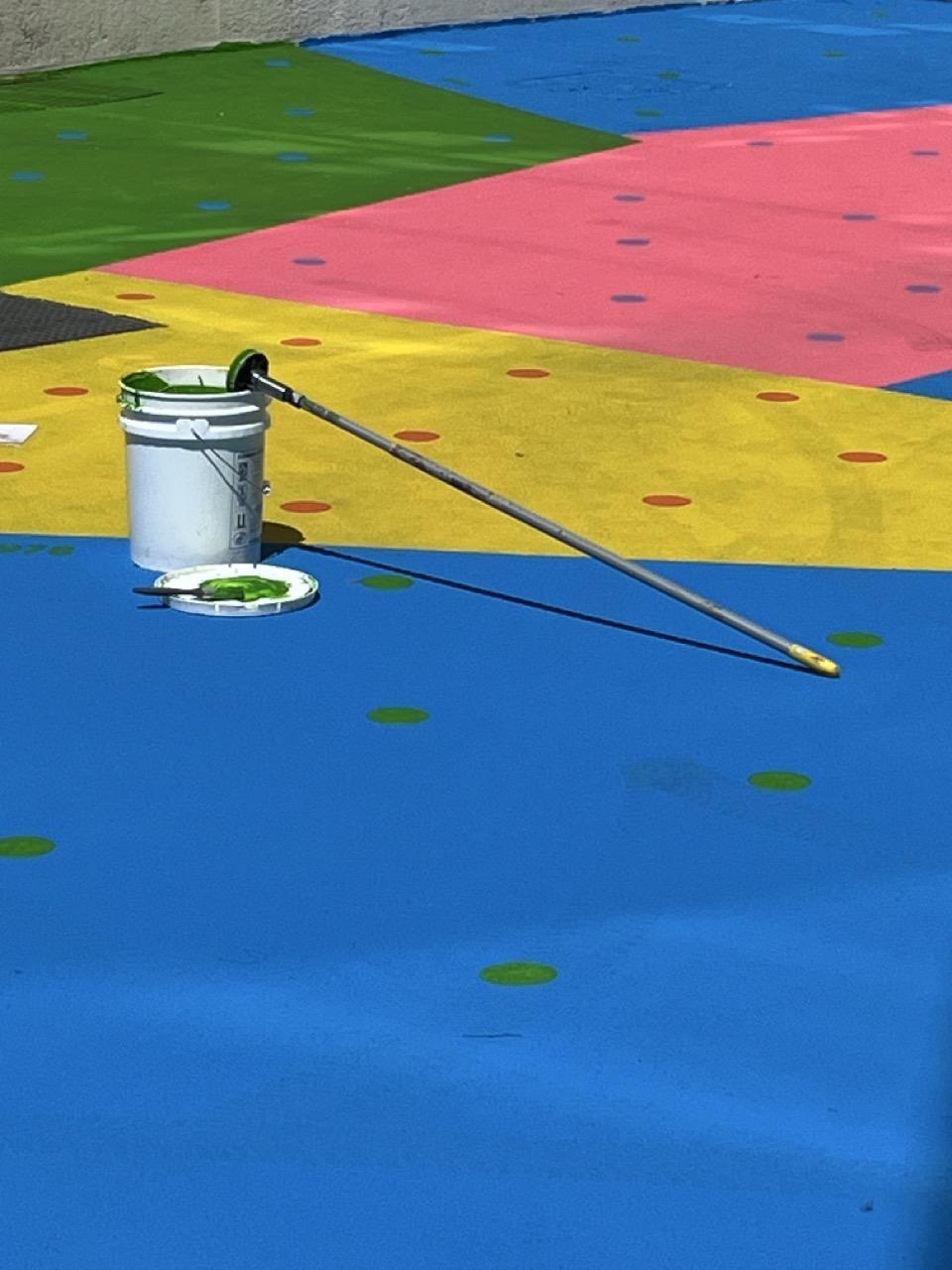
Projekt: CO₂ntext Foto: Bundestheater Holding © Bundestheater Holding
Through the CO₂ntext project, the Heidi Horten Collection, in collaboration with the Bundestheater-Holding and ART for ART, is sending a clear message about climate awareness and sustainable urban design. The focus is on the colorful floor murals in the Hanuschhof—the plaza between the Heidi Horten Collection and the surrounding buildings—which are not only aesthetically pleasing but also have a positive effect on the microclimate.
“It was a central concern of ours to use the Heidi Horten Collection not only to create a space for art but also to actively assume social responsibility. With CO₂ntext, we’re transforming the Hanuschhof into a place that brings together climate, city, and art—and demonstrate that even small urban interventions can have a big impact,” say the curators of the Heidi Horten Collection.
since June 2025
The Graz-based artist collective Holla Hoop designed the courtyard using an innovative, UV-reflective special paint that reflects the sun’s rays more effectively than, for example, a dark asphalt surface. The result: a measurable cooling of the microclimate in the Hanuschhof, which benefits not only museum visitors and the staff of the offices and costume workshops located there, but also residents and passersby in the surrounding area.